Best Dry Dog Food for Large Breeds: Protein and Fat Targets Compared
General nutrition information compiled from product labels and published sources, not veterinary advice. Your veterinarian is the right person to choose a diet for your dog, especially one with a health condition.
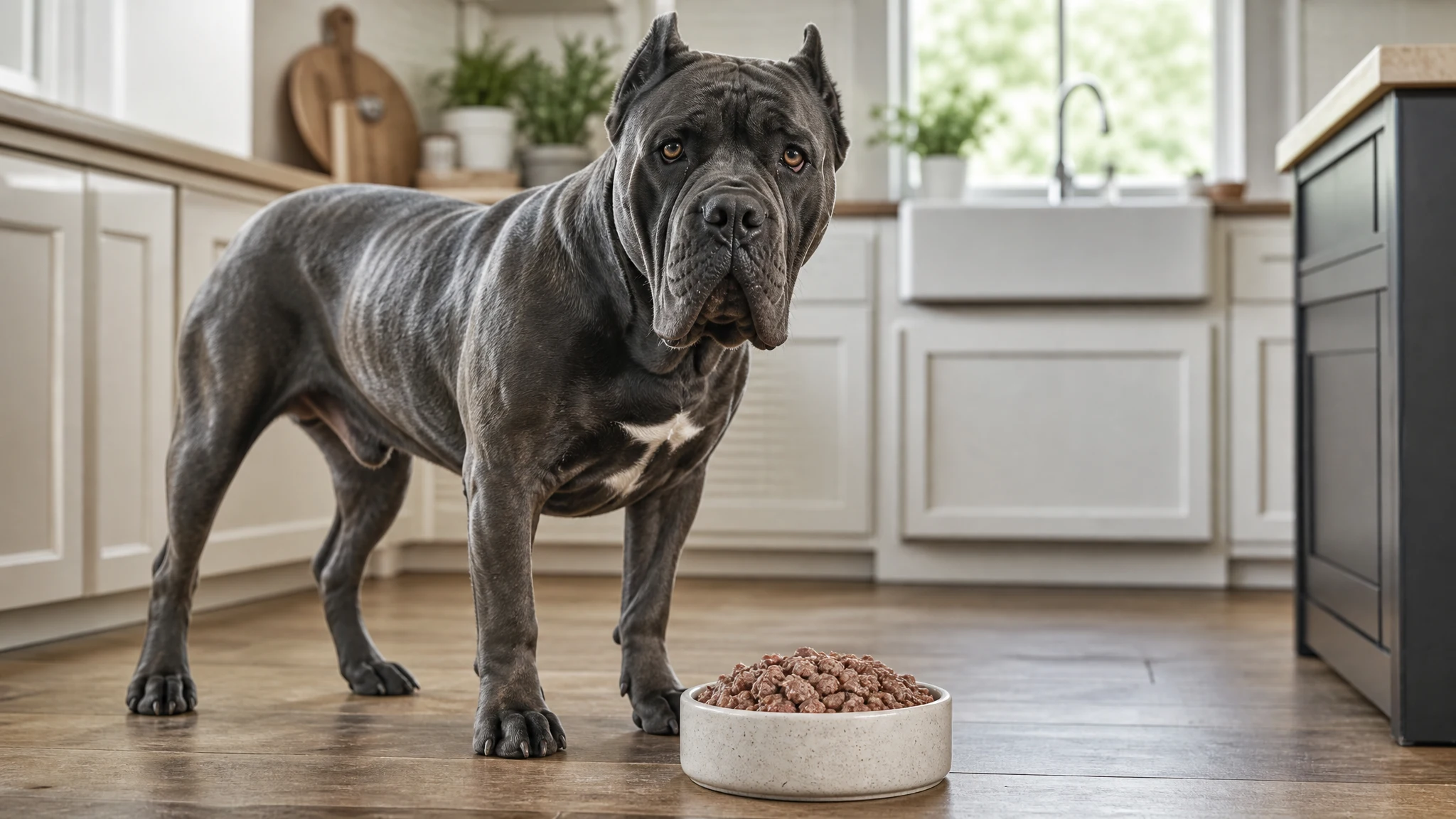
A Cane Corso is a big dog, and the bag you pick matters for years. The Chewy breed education page lists adult Cane Corsos at 88 to 110 pounds and a life expectancy of 9 to 12 years. That is a lot of meals.
Front-of-bag claims are mostly marketing. This guide shows you how to read the label panel and compare protein, fat, calories and ingredients on dry foods made for large dogs. We compared label data from the brands' own pages. We did not run feeding trials or taste tests, so nothing here is a ranking of how dogs did on these foods.
What you need before you start
- The bags or brand product pages for the foods you are considering.
- Your dog's age and a recent weight from your veterinarian.
- A pen and paper, or a simple spreadsheet.
- A calculator for calorie math.
- Your veterinarian's input on body condition and any health concerns.
Step 1: Match the food to your dog's life stage
Start with life stage, because protein and fat targets mean little if the food is built for the wrong stage.
Whole Dog Journal explains that growth and all-life-stages foods must state whether they include or exclude growth of large-size dogs, meaning dogs 70 pounds or more as adults. A food labeled "including" is considered appropriate for large-breed puppies. One labeled "except for" is not. A Cane Corso falls well above the 70 pound line.
Whole Dog Journal also notes that too much calcium can harm large-breed puppies, so a puppy should get a growth food labeled for large-size dogs. When a Cane Corso counts as an adult for feeding purposes is not something we could confirm from a source. Ask your breeder and veterinarian before switching foods.
Step 2: Find the AAFCO adequacy statement
Look for the small print that begins with wording like "formulated to meet the nutritional levels established by the AAFCO Dog Food Nutrient Profiles" or "animal feeding tests using AAFCO procedures." It names the life stage: growth, maintenance, or all life stages.
The two wordings are different. "Formulated to meet" means the recipe matches the nutrient profile on paper. "Feeding tests" means the company ran a trial with dogs. Hill's Science Diet Puppy Large Breed uses the feeding-test wording on its product page. The Royal Canin and Victor foods below use the formulated-to-meet wording on theirs. Neither is automatically better, but it is worth knowing which one you are looking at.
Step 3: Record protein and fat the same way for every food
This is where comparisons go wrong. Some brands publish guaranteed analysis minimums on an as-fed basis. Others publish dry matter averages, which are not minimums and are not directly comparable.
On its pages, Hill's gives dry matter averages for its dry large-breed foods. Royal Canin and Victor list protein and fat minimums. Treat the two kinds of numbers as different measurements, and do not decide a winner from a one or two point gap between them.
Dry large-breed foods, label data compared
| Food | Stage and statement | Protein | Fat | Calories per cup | First ingredient |
|---|---|---|---|---|---|
| Hill's Science Diet Puppy Large Breed Chicken & Brown Rice | Large-breed puppy, up to 18 months; feeding-test statement | 26.7% (dry matter average) | 15.4% (dry matter average) | 387 | Chicken |
| Royal Canin Size Health Nutrition Large Puppy | Growth, including large-size dogs; up to 15 months | 28% min | 14% min | 349 | Chicken by-product meal |
| Victor Hi-Pro Plus Large Breed Puppy | All life stages, including growth of large-size dogs | 30% min | 14% min | 365 | Chicken |
| Victor Elite Canine | All life stages; large breed, normal activity | 25% min | 14% min | 386 | Chicken meal |
| Hill's Science Diet Adult Large Breed Chicken & Barley | Adult maintenance, ages 1 to 5 | 23.8% (dry matter average) | 15% (dry matter average) | 365 | Chicken |
| Royal Canin Size Health Nutrition Large Adult | Adult maintenance, 15 months to 5 years | 24% min | 15% min | 360 | Chicken by-product meal |
| Hill's Science Diet Adult 6+ Large Breed | Mature adult maintenance, 6+ years | 18.7% (dry matter average) | 13.5% (dry matter average) | 352 | Chicken meal |
| Royal Canin Size Health Nutrition Large Aging 8+ | Senior maintenance, 8+ years | 25% min | 15% min | 308 | Chicken by-product meal |
Sources: the Hill's Pet Nutrition, Royal Canin US and Victor Super Premium Pet Food product pages. Royal Canin calories are listed as ME per cup, as fed, calculated. Victor uses a standard 8 oz cup.
The Royal Canin Giant Puppy formula (32% protein minimum, 12% fat minimum, 338 kcal per cup) is aimed at giant breeds. Ask your veterinarian which size category fits your puppy before choosing it.
Step 4: Read the first five ingredients
Ingredients are listed by weight before cooking. The first five show the base of the recipe, and the label tells you what the food is made from, not how good it is.
- Hill's Puppy Large Breed: chicken, brown rice, whole grain oats, chicken meal, cracked pearled barley.
- Royal Canin Large Puppy: chicken by-product meal, corn, wheat, chicken fat, wheat gluten.
- Victor Hi-Pro Plus Large Breed Puppy: chicken, chicken meal, brown rice, whole grain millet, whole grain sorghum.
- Victor Elite Canine: chicken meal, whole grain brown rice, grain sorghum, peas, chicken fat.
A by-product meal is not automatically a problem, and a whole chicken first is not automatically better. Whole chicken contains a lot of water before cooking, so a meal can contribute more protein by weight. Use the ingredient list to spot things your dog should avoid, not to crown a winner. None of the foods above is labeled grain-free.
Step 5: Compare calories, then compare cost per day yourself
Calories per cup range from 308 to 387 across the foods in the table. A dense food means a smaller scoop. A lighter food means a larger one.
Check the feeding guide on the brand page, and treat it as a starting point. Hill's says to adjust amounts to maintain optimal weight. The Royal Canin Large Adult page lists a 62 pound dog with low activity at 3 cups (290 g) per day. The Victor Elite Canine page charts adult amounts by weight and adds 1/2 cup for every 20 pounds above 100. Our Cane Corso feeding chart by age goes deeper on portions.
We do not list prices here. Prices change by store and region, so work out cost per day yourself from the bag price and the daily amount.
Step 6: Check the food against your dog's health picture
The Cane Corso Association of America's CHIC page lists hip dysplasia, elbow dysplasia and an OFA cardiac evaluation among the breed's health screenings. The Chewy breed page notes that a deep chest raises the risk of bloat (GDV) and that extra weight strains the joints.
No dry food label can promise to prevent or treat any of these. What the label can do is help you control calories, which helps you keep a lean body condition. Your veterinarian decides what is right for an individual dog, including whether a prescription diet is appropriate. Those are only available through a veterinarian.
On the DCM question, the FDA's investigation page was last updated December 23, 2022, and the agency said it did not plan further public updates until there is meaningful new scientific information. We did not find a newer FDA update. If you are weighing grain-free or legume-heavy diets, talk with your veterinarian and check the FDA page for changes.
Step 7: Transition slowly and watch your dog
Switch foods over about a week or more by mixing a growing share of the new food into the old. Watch stools, appetite, energy and body shape. Run your hands along the ribs: you should be able to feel them without pressing hard. If you are unsure, ask your veterinarian to score body condition.
Tips
- Compare like with like: minimums with minimums, dry matter averages with dry matter averages.
- Weigh the dog every few weeks during growth and adjust with your veterinarian.
- Measure with a real measuring cup or a kitchen scale, not a coffee mug.
- Count treats in the daily calories.
- Check the brand page for kibble size. We found no kibble size listed for these foods, so confirm it yourself if your dog gulps food.
Common mistakes
- Feeding an adult-only food to a puppy. Some formulas are labeled for adult maintenance only. Those are not growth formulas.
- Choosing by highest protein. A higher number does not mean a better fit. Large-breed puppies need a food labeled for their growth, not the biggest percentage.
- Treating "large breed" on the front as proof. Read the AAFCO statement. For Victor Elite Canine, check the label for how it addresses growth of large-size dogs before using it for a puppy.
- Assuming the size range fits. Royal Canin Large Adult lists 56 to 100 pounds and Hill's Adult Large Breed lists 55 to 110. A male Cane Corso can sit at the top of or above those ranges, so ask your veterinarian.
- Following the bag blindly. The guide is a starting point.
What to expect
A food that matches your dog's life stage and is fed at a sensible amount may help support steady growth in a puppy or a healthy weight in an adult. Results vary by dog, and a label comparison cannot predict how your Cane Corso will do. Expect to adjust portions after a few weeks based on weight and body condition, and keep your veterinarian in the loop.
Sources
- Whole Dog Journal: In the Fine Print, Nutritional Adequacy Statements
- Chewy breed education page: Cane Corso
- Cane Corso Association of America: CHIC page
- FDA CVM: DCM investigation page
- Hill's Science Diet Puppy Large Breed
- Hill's Science Diet Adult Large Breed
- Hill's Science Diet Adult 6+ Large Breed
- Royal Canin Large Puppy
- Royal Canin Large Adult
- Royal Canin Large Aging 8+
- Victor Hi-Pro Plus Large Breed Puppy
- Victor Elite Canine