Dog Food for a Working or Active Cane Corso
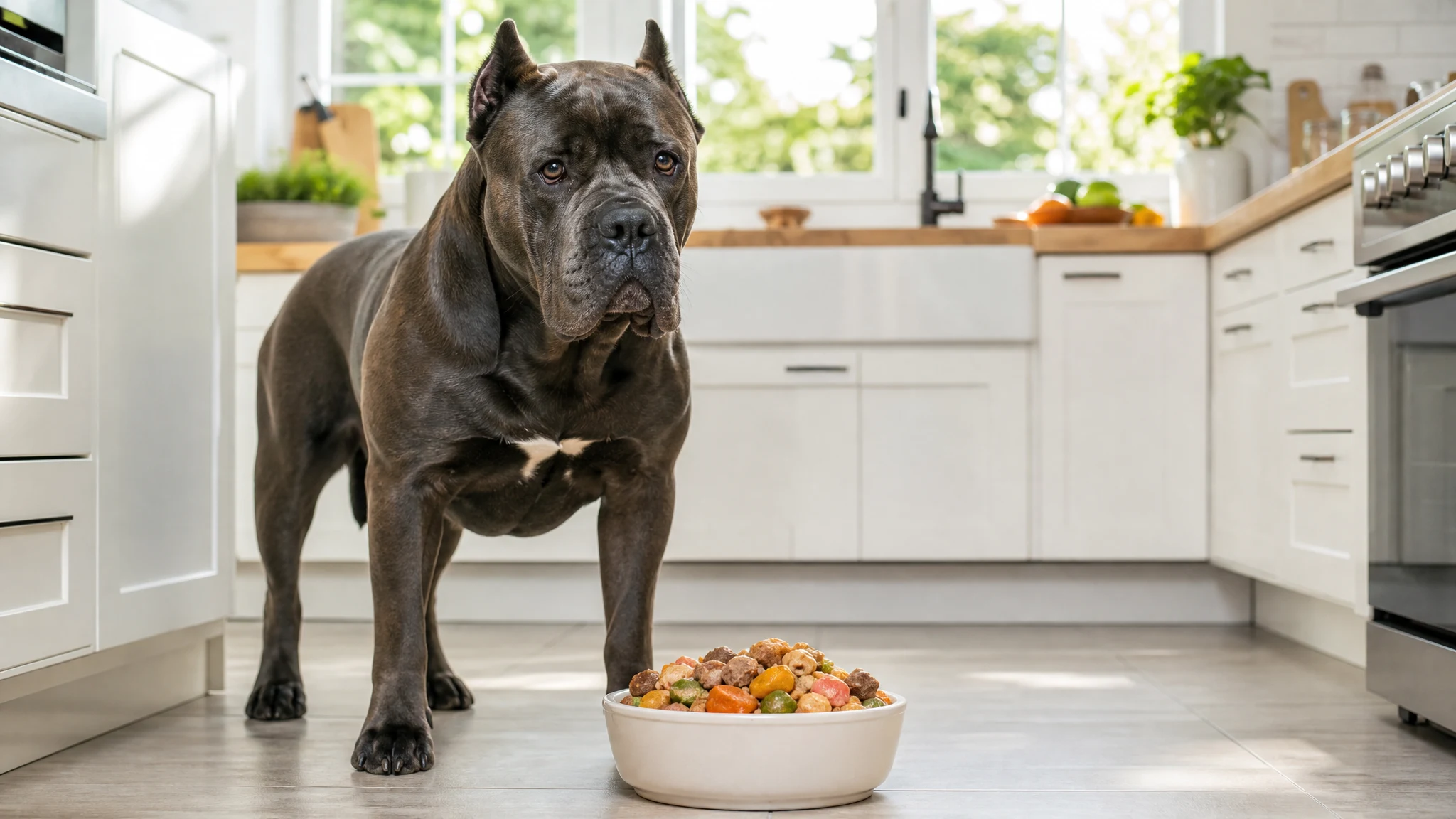
General nutrition information compiled from product labels and published sources, not veterinary advice. Your veterinarian is the right person to choose a diet for your dog, especially one with a health condition.
A Cane Corso that hikes, trains, pulls a cart, or does daily protection or farm work burns more energy than a couch companion. Feeding that dog well comes down to reading labels, measuring food, and watching the body in front of you.
This guide walks through the steps. It compares foods on label data only. We did not run feeding trials or taste tests, and nothing here says a food prevents or treats any condition.
What you need
- The bag, can or package of your current food, with the nutritional adequacy (AAFCO) statement visible
- A standard 8 oz measuring cup or a kitchen scale
- A notebook or phone note for weight and body condition checks
- Your dog's current weight from a recent vet visit
- The brand's own product page for the exact food you are considering
Step 1: Confirm the life stage on the label
Start with the AAFCO statement. It tells you whether a food is built for growth, adult maintenance, or all life stages.
Adult Cane Corsi are large dogs. One breed education page from Chewy lists adult weight at 88 to 110 pounds. That is above the 70 pound line AAFCO uses for large-size dogs.
For puppies, Whole Dog Journal explains that growth and all-life-stages foods must state whether they include or exclude growth of large-size dogs. Foods labeled "including" are considered appropriate for large-breed puppies. Foods labeled "except for" are not. Whole Dog Journal also notes that too much calcium can harm large-breed puppies, so choose a growth food labeled for large-size dogs.
An active adolescent is still a puppy. Do not move a young dog to an adult food just because the workload goes up. The brand and your veterinarian can tell you when a switch makes sense. The Cane Corso Association of America or your breeder may have views on timing as well.
Step 2: Compare label data side by side
The table uses numbers from each brand's own product page. Royal Canin and Victor list guaranteed analysis minimums. Hill's lists dry matter averages, which are a different measure, so do not line those numbers up against the others.
| Food | Label life stage | Protein / fat | Calories | First ingredients |
|---|---|---|---|---|
| Royal Canin Size Health Nutrition Large Adult | Adult maintenance, 56 to 100 lb dogs | 24% min / 15% min | 360 kcal ME per cup | Chicken by-product meal, brewers rice, wheat, brown rice, chicken fat |
| Victor Elite Canine | All life stages, large breed, normal activity | 25% min / 14% min | 386 kcal per cup | Chicken meal, whole grain brown rice, grain sorghum, peas, chicken fat |
| Hill's Science Diet Adult Large Breed Chicken & Barley | Adult maintenance, ideal weight 55 to 110 lb | 23.8% / 15% (dry matter averages) | 365 kcal per cup | Chicken, cracked pearled barley, brown rice, brewers rice, whole grain wheat |
| Victor Hi-Pro Plus Large Breed Puppy | All life stages including growth of large size dogs | 30% min / 14% min | 365 kcal per cup | Chicken, chicken meal, brown rice, whole grain millet, whole grain sorghum |
| Freshpet Complete Nutrition Chicken Recipe with Wholesome Grains & Carrots | Adult maintenance only | 7.5% min / 7% min | 1,357 kcal per kg (calculated); no per-cup figure | Chicken, chicken broth, brown rice, rice bran, carrots |
A few honest observations from the labels:
- Calories per cup range from 360 to 386 among the dry foods above. At the same cup count, the denser food delivers more energy.
- Freshpet's protein and fat percentages look low because the roll holds a lot of moisture. It is an adult maintenance food, so it does not suit a Cane Corso puppy.
- Royal Canin's first ingredient is a by-product meal. Victor's and Hill's lead with chicken or chicken meal. Ingredient order alone does not tell you which food is better for your dog.
- The Victor Elite Canine and Hi-Pro Plus pages do not list kibble size in a way we could confirm. Check each brand's page for details.
Check each AAFCO statement on the current label before you buy. Formulas change, and the wording on your bag is what counts.
Step 3: Set a starting amount from the label
Every feeding guide is a starting point. Brands say as much. Hill's tells owners to adjust amounts to maintain optimal weight and to ask a veterinarian if unsure.
Some examples of what the labels say:
- Royal Canin Large Adult lists a 62 pound dog with low activity at 3 cups (290 g) per day. Its chart is organized by target adult weight and activity level, which is useful for a working dog.
- Victor Elite Canine charts adult amounts by weight. For dogs over 100 pounds, it adds 1/2 cup for every 20 pounds above 100.
- Freshpet lists 1 1/2 pounds a day for dogs 61 pounds and up, plus 1/4 pound for each additional 25 pounds over 60.
For a breakdown by age, see our Cane Corso feeding chart by age.
Weigh out the portion rather than eyeballing a scoop. Kibble packs differently from one scoop to the next.
Step 4: Match the portion to the workload
The labels above do not give a calorie target for working Cane Corsi, so we cannot name one. Ask your veterinarian to help set a daily calorie range for your dog's weight and job.
In practice, many owners adjust in small steps. Add or remove a modest amount, hold it for a couple of weeks, and check the dog's body condition and weight. Make one change at a time so you can tell what caused what.
Weight matters for this breed. The Chewy breed page lists obesity as a concern because extra weight strains the joints. The Cane Corso Association of America's CHIC page lists hip dysplasia, elbow dysplasia and cardiac evaluation among the health checks for the breed. Keeping a lean, fit dog is a sensible goal, and your veterinarian decides what is right for an individual dog.
Step 5: Think about meal timing and bloat
The Chewy breed page notes that a deep chest raises the risk of bloat (GDV), and that gastropexy can help prevent it. No food choice replaces a conversation with your vet about this.
Ask your veterinarian how to split meals and how to space hard exercise around them. Learn the signs of bloat, and treat a swollen belly, retching with nothing coming up, or sudden distress as an emergency.
Step 6: Switch foods slowly
- Day 1 to 3: mostly the old food with a small share of the new one.
- Day 4 to 6: about half and half.
- Day 7 to 9: mostly the new food.
- Day 10: all new food, if stools and appetite look normal.
This schedule is a common approach, not a rule from a brand. Go slower if your dog has a sensitive stomach, and call your vet if vomiting or diarrhea continues.
Step 7: Track results and adjust
Every two to four weeks, weigh your dog and check the ribs and waist. You should be able to feel the ribs under a thin layer of padding. Write down the date, the weight, the daily amount and how the dog is working.
Tips and common mistakes
- Using a puppy or all-life-stages formula by default. Check the statement. All-life-stages foods are not automatically right for every dog.
- Chasing the highest protein number. Protein is one line on a label. Calories, life stage and body condition matter too.
- Comparing mismatched numbers. Dry matter averages and as-fed minimums are not the same measure.
- Forgetting treats. Training treats count toward daily calories.
- Feeding a large meal right before hard work. Ask your vet about timing.
- Adding supplements on your own. Talk to your veterinarian first. We give no doses here.
- Reading too much into grain-free or not. The foods in the table are all grain-inclusive. The FDA's page on its DCM investigation was last updated December 23, 2022, and the agency said it does not plan further public updates until there is meaningful new scientific information. If heart health concerns you, ask your veterinarian.
What to expect
With a complete and balanced food that suits the dog's life stage, measured portions and regular weight checks, many owners find their dogs hold a steady weight and keep their energy for the work. Results vary from dog to dog. A food cannot prevent or treat hip dysplasia, bloat, heart disease or allergies, and no label claim should be read that way.
If your dog loses weight, gains weight, or has a change in stool, energy or coat, talk to your veterinarian before changing foods again. Prescription diets are something only a veterinarian prescribes.
Sources
- Whole Dog Journal: In the Fine Print, Nutritional Adequacy Statements
- Cane Corso Association of America: AKC Canine Health Foundation CHIC page
- FDA Center for Veterinary Medicine: DCM investigation
- Royal Canin: Size Health Nutrition Large Adult
- Victor: Elite Canine
- Victor: Hi-Pro Plus Large Breed Puppy
- Hill's Pet Nutrition: Science Diet Adult Large Breed
- Freshpet: Complete Nutrition Chicken Recipe with Wholesome Grains & Carrots