Human Foods Cane Corsos Should Never Eat
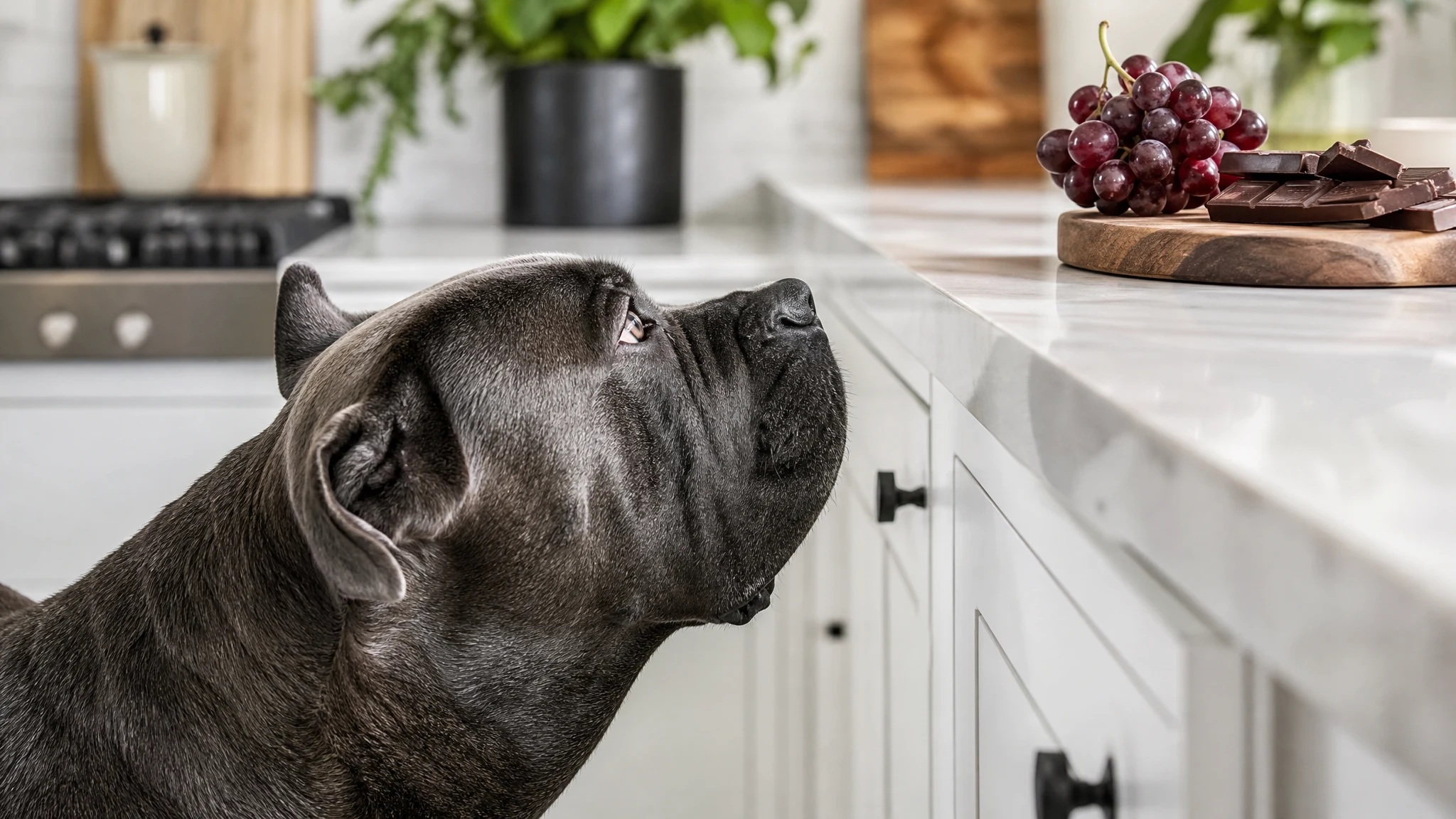
General nutrition information compiled from product labels and published sources, not veterinary advice. Your veterinarian is the right person to choose a diet for your dog, especially one with a health condition.
A Cane Corso is a big dog, usually 88 to 110 pounds according to the Chewy breed education page, so it is easy to assume a dropped snack is no problem. It can be. Many everyday foods are unsafe for dogs of any size.
This page answers common questions about human foods dogs can't eat, what Cane Corsos can have as an occasional treat, and what to do if something goes wrong. For the daily bowl, see our Cane Corso dog foods compared by label data.
The Basics
What can Cane Corsos not eat?
The ASPCA Animal Poison Control Center lists many people foods as harmful to dogs, including chocolate, grapes and raisins, xylitol, onions and garlic, macadamia nuts and alcohol. Cooked bones, very fatty scraps and raw yeast dough are also common problems. The sections below explain each one.
Why do foods that are fine for people harm dogs?
Dogs process some substances differently from people. Compounds that a person clears easily can build up or damage organs in a dog. That is why "it is natural" or "it is healthy for me" is not a safe test.
Does a Cane Corso's size make toxic foods safe?
No. A large body can change how much of a substance causes trouble, but it does not make a toxic food safe. Some items, such as grapes and xylitol, are on the ASPCA's concern list for dogs generally, and nothing suggests a big breed is exempt.
Where should I check if I am unsure about a food?
Look up the ASPCA Animal Poison Control Center's list of people foods, and ask your veterinarian. If the food is not on a list, treat that as "unknown," not "safe."
Sweets, Drinks and Stimulants
Can Cane Corsos eat chocolate?
No. The ASPCA lists chocolate as toxic to dogs because it contains methylxanthines. Dark chocolate and baking chocolate are generally described as the more concerning types, but no chocolate is a treat for a dog.
Is xylitol really that dangerous?
Yes. The ASPCA warns that xylitol, a sweetener, is dangerous for dogs. It turns up in sugar-free gum, some candy, baked goods and certain peanut butters, so read the ingredient list on any human food before sharing it.
Can Cane Corsos have coffee, tea or energy drinks?
No. The ASPCA lists caffeine among the substances that can harm dogs. That includes coffee grounds, tea bags and energy drinks, which a curious dog can reach on a low table.
What about alcohol?
Alcohol is on the ASPCA's list of things dogs should not have. This covers drinks and also foods made with alcohol, such as some desserts. Clean up spills and unattended glasses at gatherings.
Fruits, Nuts and Produce
Can Cane Corsos eat grapes or raisins?
No. The ASPCA lists grapes and raisins as toxic to dogs, and the reason is not fully understood. Because of that, even a small amount is not worth the risk, and this includes raisins hidden in cookies or trail mix.
Are onions and garlic harmful?
The ASPCA lists onions, garlic, chives and leeks as harmful to dogs. They can damage red blood cells, and cooked, raw and powdered forms all count. Watch for them in leftover gravy, soups and seasoned meats.
Are macadamia nuts a problem?
Yes. The ASPCA names macadamia nuts as toxic to dogs. Other nuts can be hard to digest or high in fat, so skip the nut bowl entirely.
What about avocado, cherries and fruit pits?
The ASPCA cautions about avocado, and fruit pits and seeds can be a choking or blockage risk in a large dog that swallows food whole. When in doubt, leave the whole fruit out of the dog's reach.
Meat, Bones, Dough and Table Scraps
Can Cane Corsos eat cooked bones?
It is best to avoid them. Cooked bones can splinter and injure the mouth or gut, and swallowed pieces can cause a blockage. Your veterinarian can tell you whether any chew is a sensible choice for your dog.
Is fatty food like bacon or trimmings safe?
Not as a habit. The ASPCA lists fatty foods as a concern because they can upset the stomach and may lead to pancreatitis. Extra calories also add up fast, and the Chewy breed education page notes that extra weight strains a Cane Corso's joints.
Why is raw bread dough dangerous?
The ASPCA warns about raw yeast dough because it can expand in the stomach. The Chewy breed education page notes that a deep chest raises the risk of bloat in Cane Corsos, so any food that swells or causes gas deserves extra caution. Keep dough well away from the dog.
What about very salty foods?
The ASPCA lists salty snacks as a problem for dogs. Chips, pretzels and cured meats are not useful treats, and a large dog can finish a bag in seconds.
Safe Snacks and Everyday Habits
Can Cane Corsos eat any people food at all?
Some plain foods are commonly used as occasional treats, such as carrot pieces, green beans or apple slices without seeds or core. Introduce one at a time and ask your veterinarian whether it suits your dog. Plain means no salt, seasoning, butter, onion or garlic.
How much of the diet can be treats?
This page does not set a number, because your veterinarian decides what fits an individual dog. A good rule is to count treats as part of the day's food, not on top of it, especially for a breed prone to carrying extra weight.
Can table scraps replace a complete dog food?
No. A food labeled complete and balanced carries an AAFCO nutritional adequacy statement, and scraps do not. For puppies, the Whole Dog Journal notes that too much calcium can harm large-breed puppies, so a growth food labeled for large-size dogs is the safer base than guesswork at the table.
If Your Dog Eats Something Unsafe
What should I do if my Cane Corso eats a toxic food?
Call your veterinarian or an emergency clinic right away, or contact the ASPCA Animal Poison Control Center. Check the ASPCA website for its current contact details and any consultation fee. Have the food, the packaging and your dog's approximate weight ready.
Should I wait for symptoms before calling?
No. Signs can be delayed, and early advice is usually easier to act on. Do not make your dog vomit or give home remedies unless a veterinarian or poison control tells you to.
Sources
- Chewy breed education page: Cane Corso
- Whole Dog Journal: In the Fine Print, Nutritional Adequacy Statements
Food toxicity information comes from the ASPCA Animal Poison Control Center's published list of people foods. Check that list directly for the most current details.